From Idea to 500 Orders
Launching a Collectible Product on My Own
Role: Sole project lead | Timeline: October 2022 – April 2023 (about 6 months) | Tools: Google Forms, email, X (Twitter), WeChat, Photoshop, a Korean preorder platform | Scope: Concept, design, manufacturing, preorders, fulfillment, and customer support
Overview
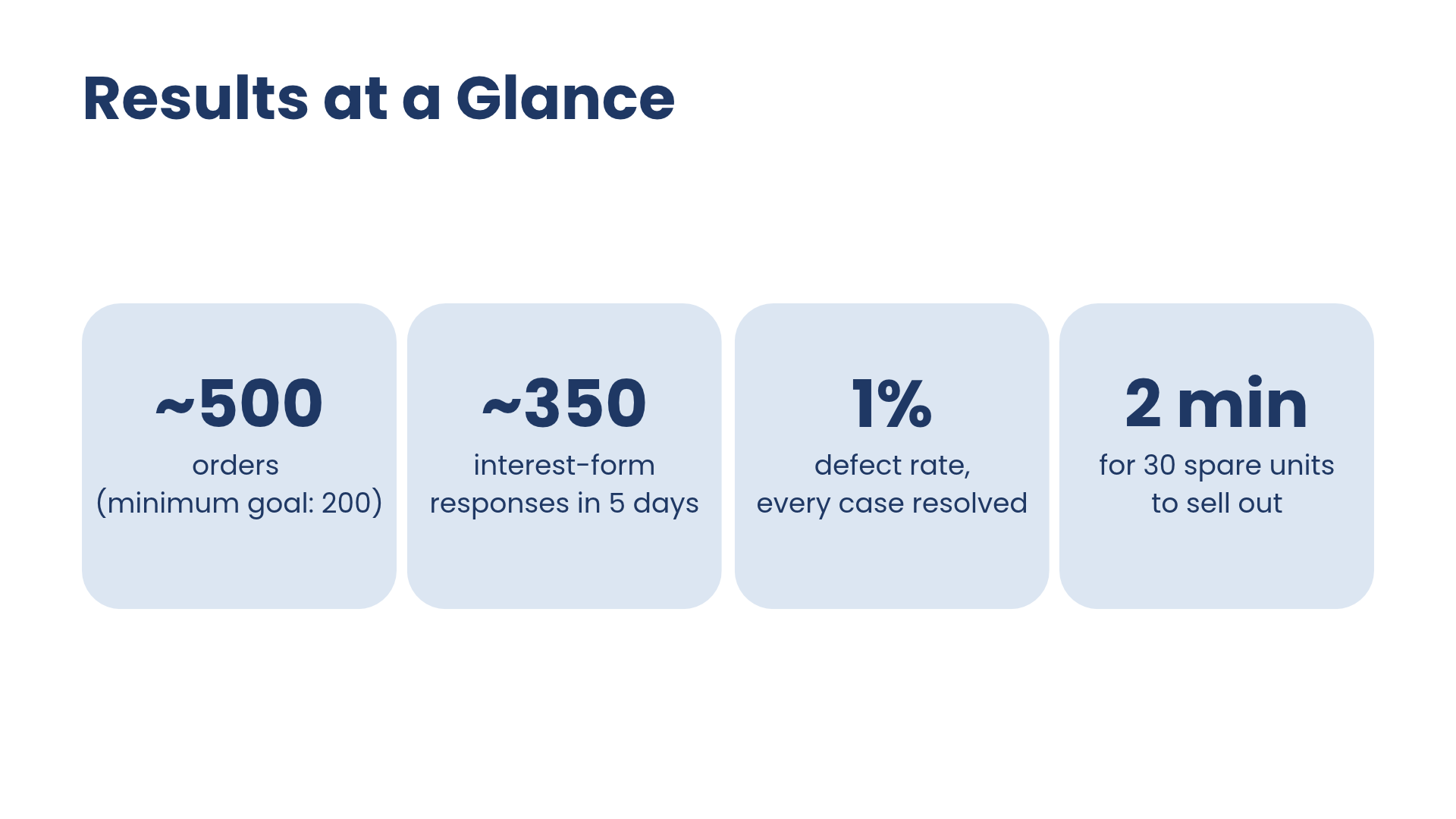
I designed and launched a 20 cm plush collectible for an online fan community, handling every stage myself: market research, design, prototyping with an overseas manufacturer, pricing, preorders, fulfillment, and customer support. The project received about 500 orders, more than double my minimum production target.
The opportunity
A few fan-made plushies already existed for this community, but they shared a similar, simple style. I saw room for a design with a more distinctive concept and color palette. I also wanted to experience running a project from start to finish, with full responsibility for every decision.
Validating demand before committing
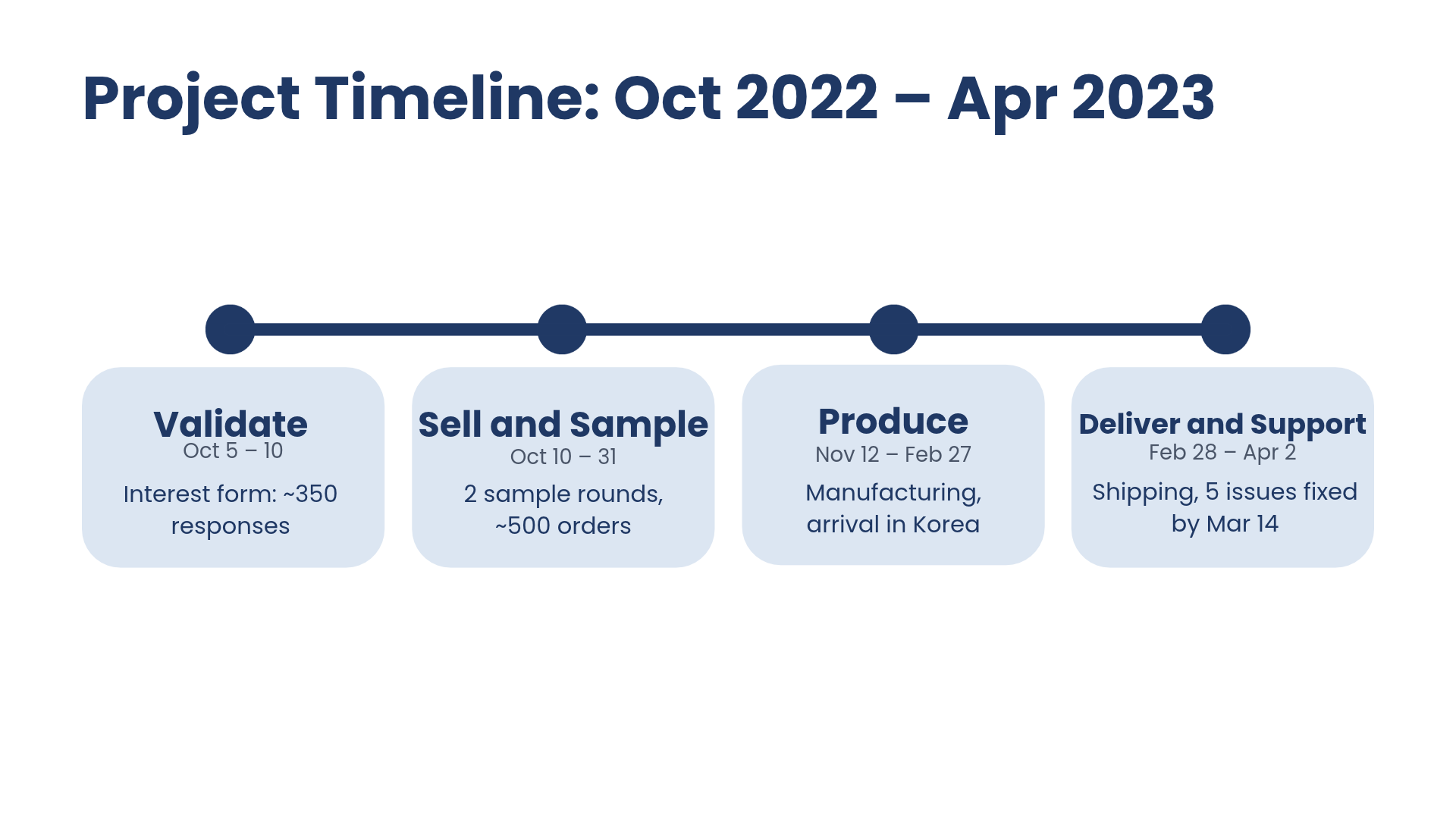
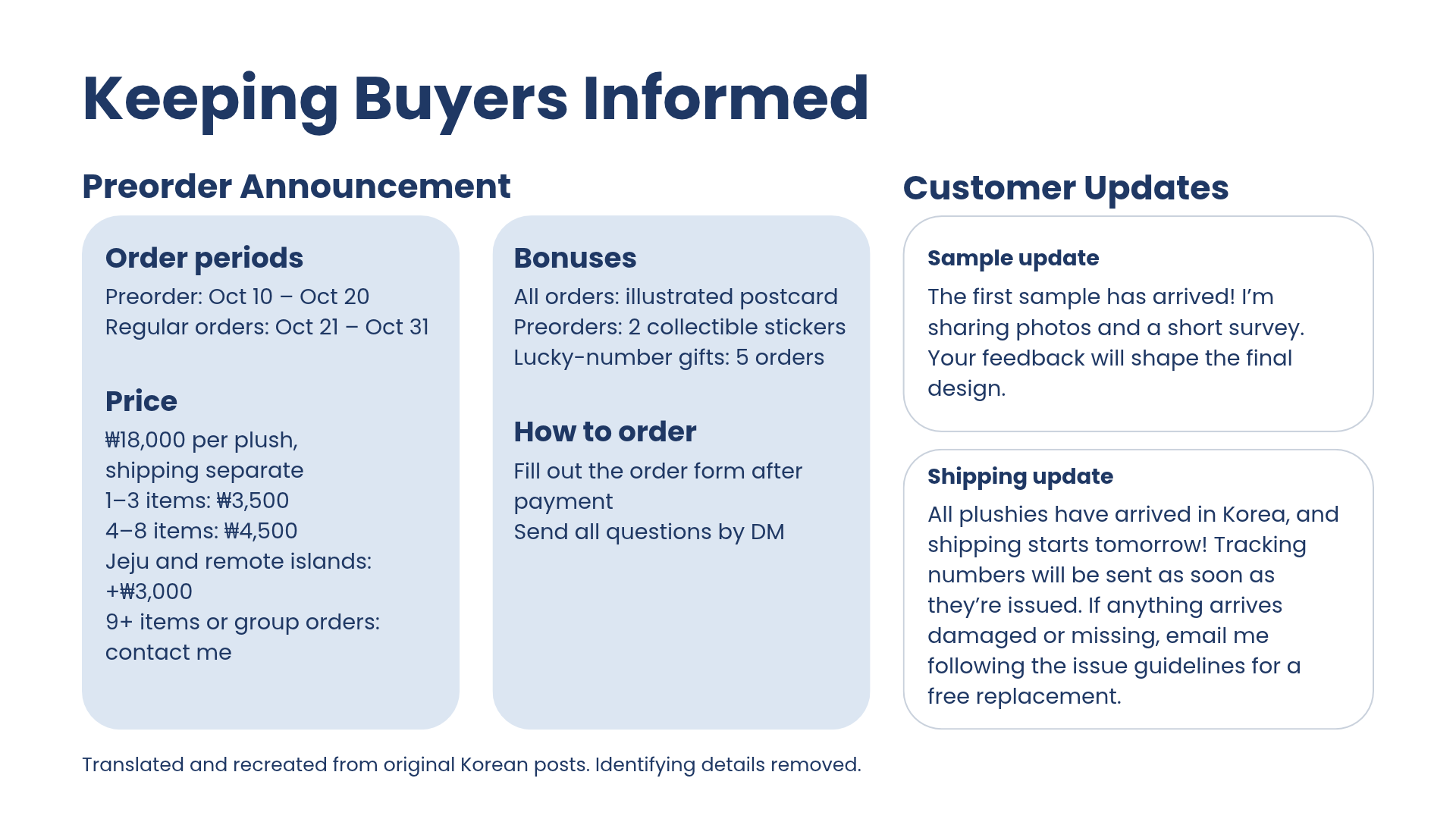
Before spending money, I opened an interest form on my preorder platform. It received about 350 responses in five days. I then got quantity-based price tiers from the manufacturer and compared similar products to set a price that covered production, add-on items, shipping, and commissions. With demand confirmed, I published a preorder announcement covering order windows, pricing, tiered shipping costs, and bonuses, and opened preorders five days after the interest form, using a giveaway on X to expand reach.
Designing with customer feedback
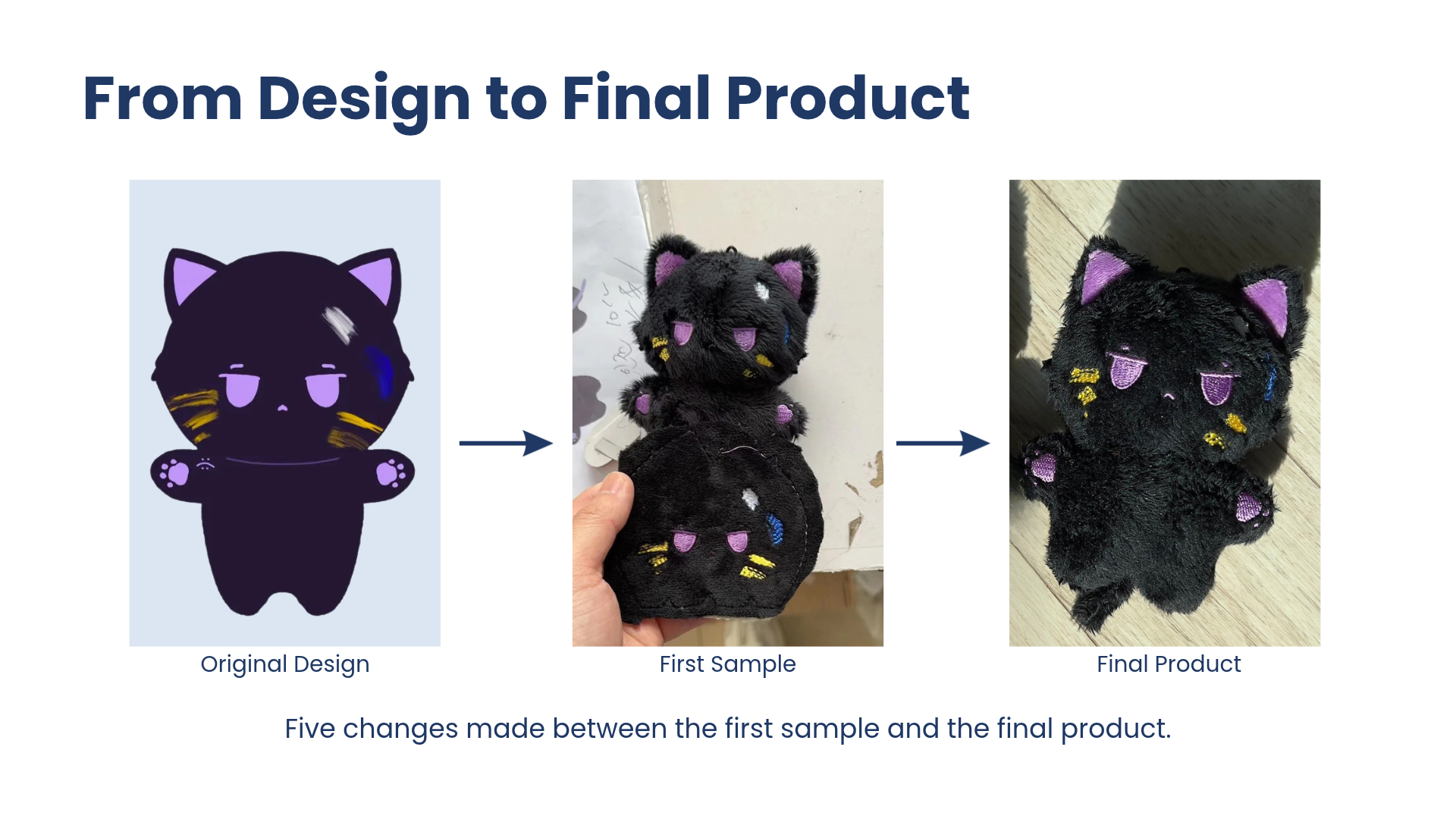
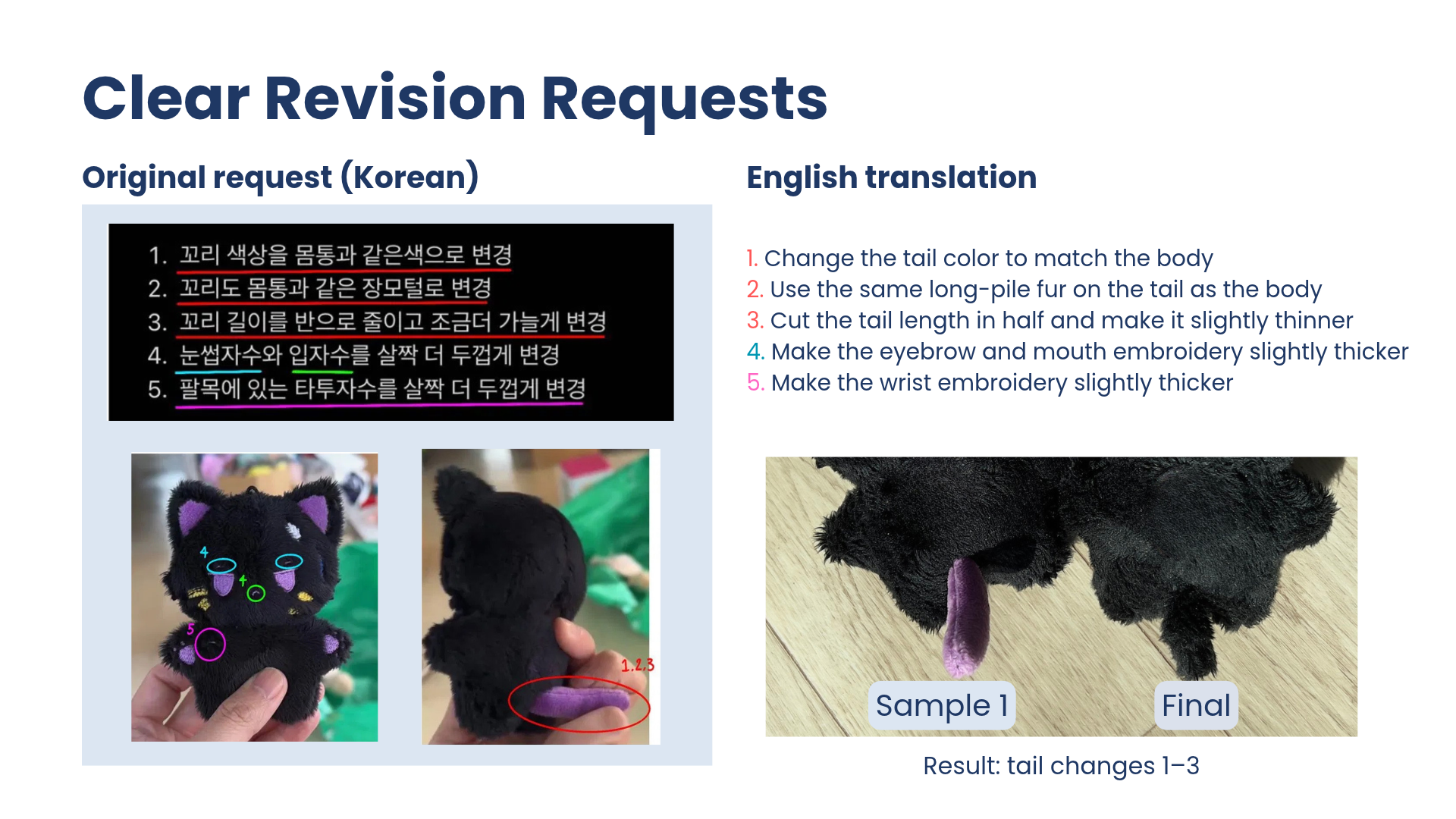
I designed an original cat character, refining small details like the paws and eyes across many drawing revisions. When the first sample arrived, I collected buyer feedback through a Google Forms survey and combined it with my own review. I then sent the manufacturer a numbered revision request with annotated photos covering five changes: matching the tail's color and fur to the body, cutting the tail length in half, and thickening three areas of embroidery. The final design was approved after the second sample.
Managing an overseas manufacturer
I found a manufacturer by reaching out to experienced creators in Korea and abroad. We worked through a WeChat group with a bilingual Korean–Chinese coordinator, which was also my first time using the app. I also learned Photoshop's exact file requirements to produce a collectible sticker with a separate company myself, rather than paying for a commission. I commissioned a local artist for a postcard included with every order.
Communicating through delays
Production took several months, so I posted regular updates at each milestone: samples, production, arrival in Korea, and shipping. Every buyer received their tracking number as soon as it was available. I received no complaints about communication.
Fulfillment and issue resolution
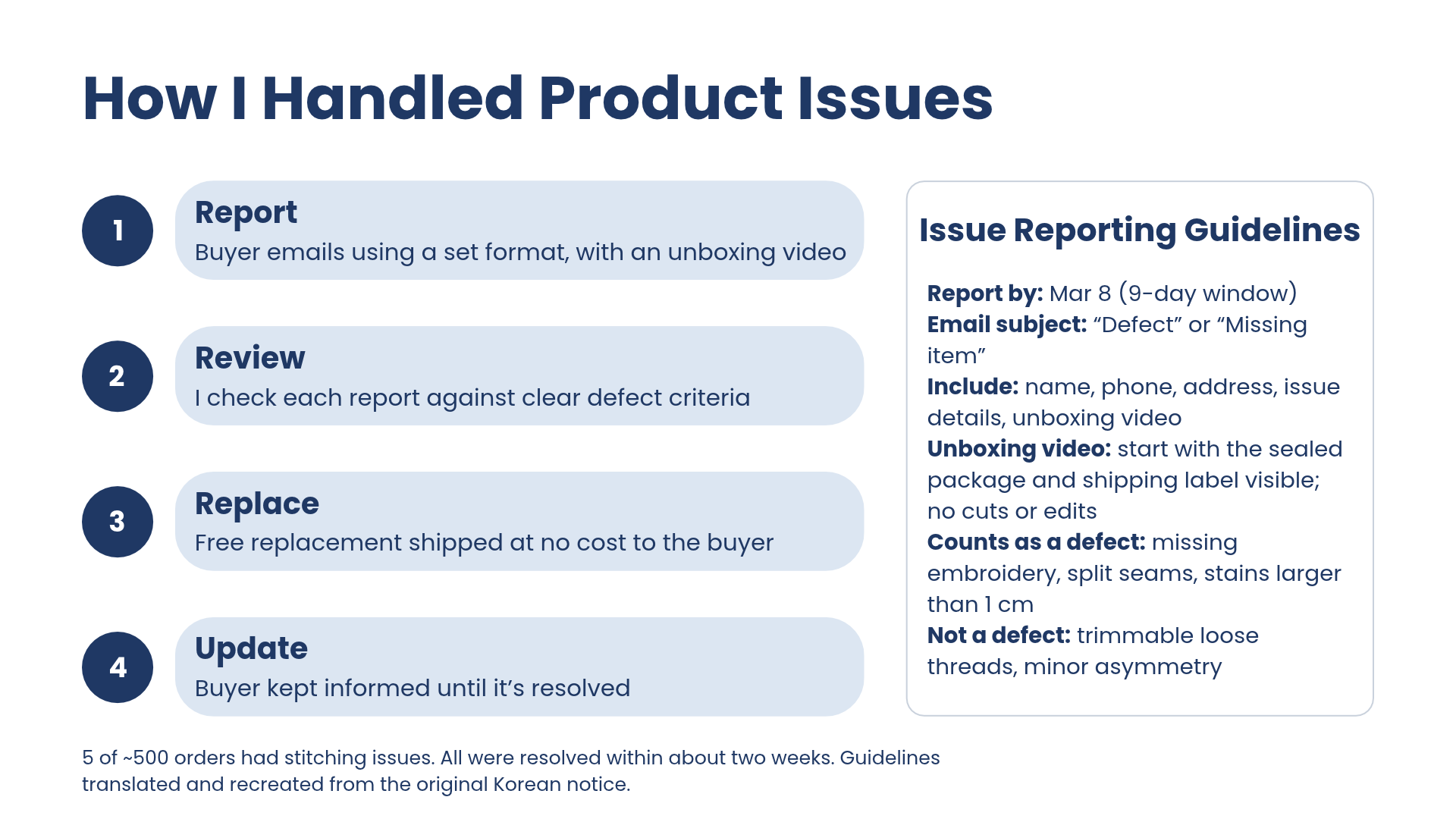
The products arrived in Korea in late February 2023, and a shipping company began sending orders the next day. On the same day, I published issue-reporting guidelines: a nine-day reporting window, a standard email format, clear criteria for what counted as a defect, and a required unboxing video so every claim could be verified fairly. Five orders, about 1%, had stitching issues. I sent each customer a free replacement as soon as their report was confirmed, and every case was resolved within about two weeks.
Results
About 500 orders across preorders and regular sales, compared with a minimum production target of 200
A defect rate of about 1%, with every case resolved
About 30 spare units, held back for replacements, sold out in roughly two minutes
Strong positive feedback, and buyers still ask if I'll sell it again
Invited to give a 20-minute guest lecture and Q&A at Yonsei University for about 50 students, comparing fan-made and official merchandise and walking through my process
What I’d do differently
I was excited and moved quickly. Next time I'd build in more buffer time, research vendors more thoroughly before choosing, and calculate costs more conservatively.